One-Side Repair
- Source
- Open flashing or cap on one owner’s side.
- Wall Detail
- The other side is tight and tied in.
- Drainage
- Each roof drains on its own.
- Approval
- The owner of the source roof approves.
- Result
- The open detail closed on that side.
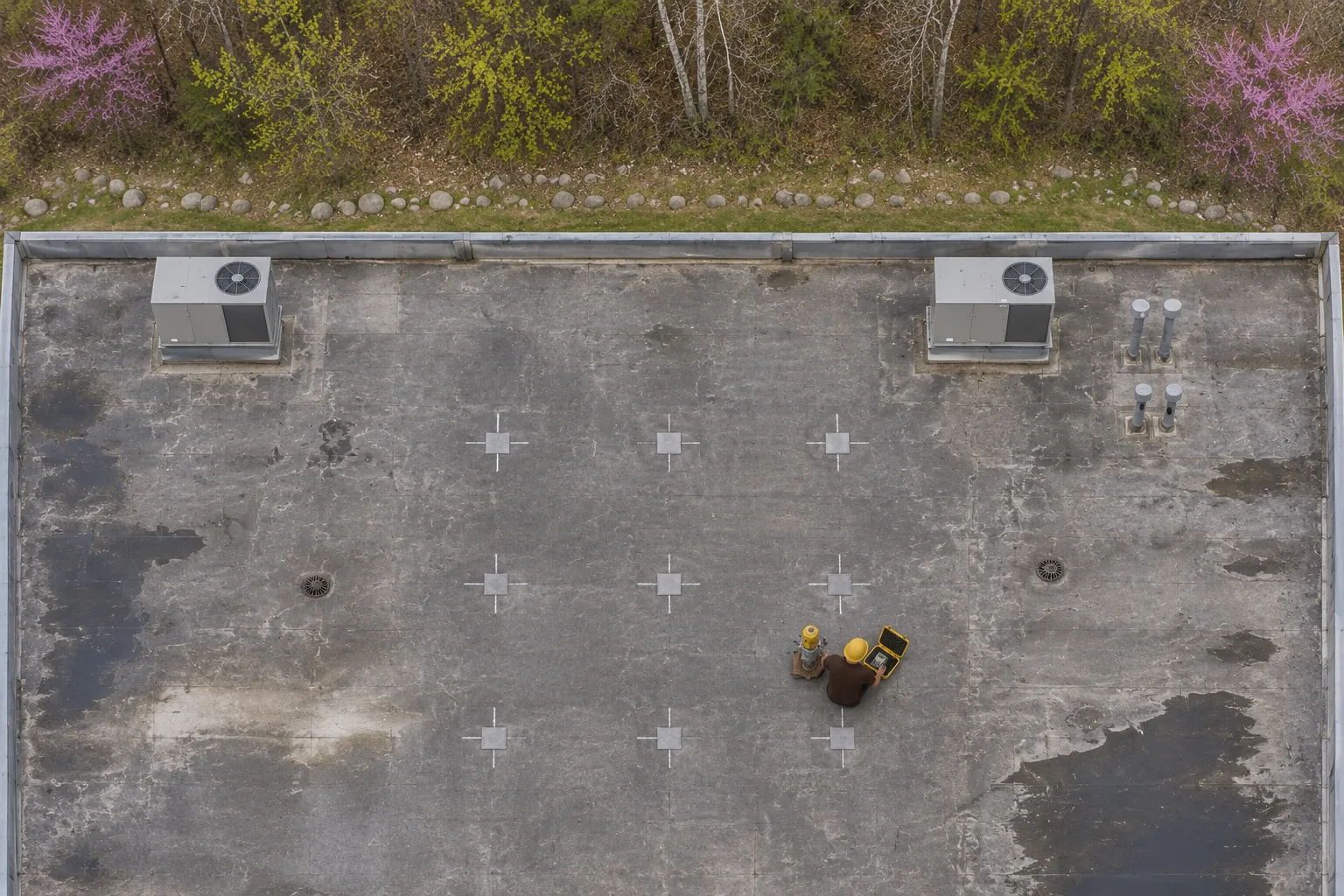
Tamaqua commercial roof repair often involves attached shops. Water can cross a shared wall or roof section, so the source is sometimes next door.

Tamaqua commercial roof repair on attached buildings starts with permission from each owner whose roof the search crosses.
Shops built side by side share parapets, wall caps, and sometimes drainage. A recurring leak in one shop can come from a failed transition on the neighbor’s side of the wall.
We inspect shared transitions and drainage routes with access authorized by the owners involved. The repair scope names the real source, while who pays stays between the parties and their agreements.

Attached buildings share more than walls.
Coping on a shared parapet gets repaired by one owner and ignored by the other, leaving open joints on one side. Both sides of the cap get inspected before any piece is reset.
One roof drains across another or into a shared gutter, sending extra water toward the lower building. Overflowing outlets show as dirt lines on the lower roof.
Each owner reroofed at different times, so membranes meet at the wall with no tied-in detail. The gap between two reroofs is usually right at the parapet base.
Rain entering a shared wall from one roof can exit inside the neighboring shop. Interior stains on both sides of the wall can share one source.
Stains that return after local repairs suggest a source outside the patched area. Repeat patches in one spot are a cue to look across the wall.
Where one roof sits higher, snow drifts against the step wall and melts into its flashing. Drifts form on the low side, so that flashing gets checked first.
Shared-wall leaks end with work on one roof or on both. The rows show what decides it.
Work across property lines follows clear steps.
Owners on both sides approve access before the inspection crosses the wall line. Contact details for both owners go in the scope.
Transitions, caps, and drainage on both roofs are checked to find which side admits the water. Photos show each side of the wall at the same spot.
New base flashing and coping join both roofs into one detail where the owners agree to it. Both membranes are trimmed to firm material first.
Shared gutters and outlets are cleared or rebuilt so neither roof floods the other. Outlets are sized for the water both roofs send there.
Finding the real source settles a leak that patches keep missing.
Naming the source roof means the repair goes where water enters, whichever side of the wall that is. Owners stop paying for patches on the wrong side of the wall.
A written finding gives neighbors the same information for their own discussion. The finding includes photos taken from both roofs.
Tying both membranes into one wall detail removes the gap between two separate reroofs. Base flashing and coping are set as one continuous piece.
Correcting shared outlets keeps one roof from sending its water onto the other. Lower roofs stop flooding after heavy rain on the upper one.
Call and mention whether your shop shares a wall with the building next door. The source may sit on the other side.
Access and evidence come before any repair on a shared wall.

Both owners approve the inspection of their roof areas near the shared wall. Access dates are confirmed with both owners in writing.
Caps, base flashing, step walls, and drainage on each roof are checked and photographed. The step wall and drift area get extra attention.
Findings show which roof or transition admits the water, written up for both owners. Neither owner is left guessing about the source.
Work proceeds on the side or sides the owners approve, tied into firm material. Photos of the finished wall go to both owners.
Tamaqua is one of six towns where we take commercial roof repairs. Each town page is listed below.

Home base; industrial park and downtown roofs.
Old sign supports and unused roof penetrations.
Wall junctions where earlier repairs meet.
Plant roofs above stored and packaged goods.
Roofs carrying layers of older patches.
Yes, if the roof or wall assembly lets water travel between the buildings. We inspect shared transitions and drainage with access from both owners, and the scope names the real source.
That is for the owners and their agreements to settle. Our findings describe where water enters so both sides work from the same facts.
The length of shared wall involved, the number of transitions, drainage work, wet insulation, and access to both roofs. The price follows the inspection.
When work lands on both sides, the scope can split the repair by roof so each owner sees their part.
We do. Small storefronts and larger attached buildings get the same steps, starting with where the water shows inside.
Whether they have noticed leaks along the shared wall and whether they will allow access to their roof near it.
Tell us where the water shows and whether you share a wall. We will check both sides with the owners’ approval.