Do You Handle Commercial Roof Repair in Bloomsburg and Pottsville?
Yes. Both towns have their own pages here, and repair calls there follow the same order: inside symptoms first, then a roof trace, then core cuts and a repair boundary.
We take commercial roof repair near Hazleton in five towns, with the same trace-first approach used in the city.
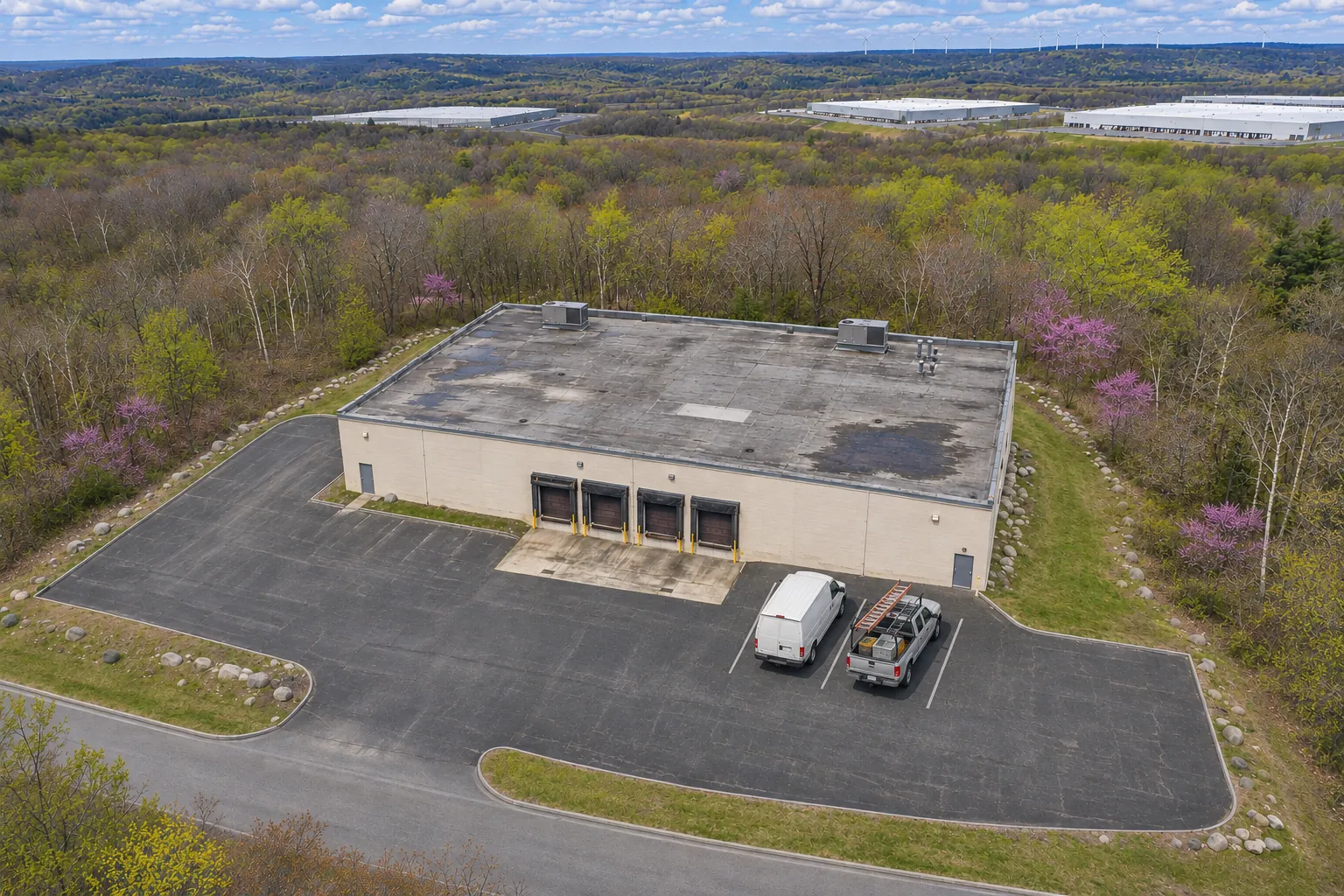
Wondering if your building is covered? Commercial roof repair near Hazleton reaches the towns below; outside them, call us or send us a message.
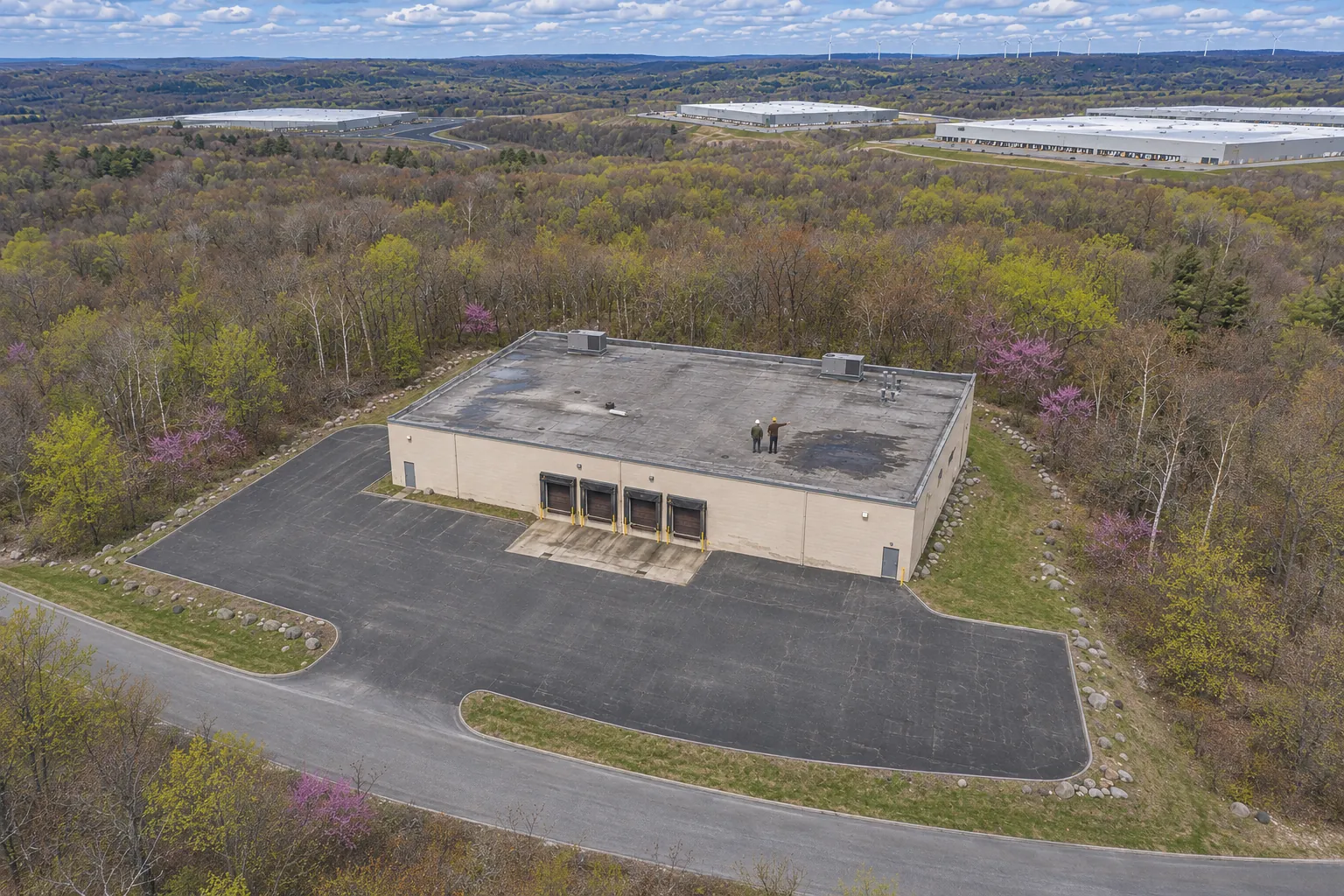
Our home base for repairs on industrial park distribution centers, bottling lines, and the older commercial blocks downtown.
Most first visits here begin inside the building, where the drip shows, before anyone climbs to the roof.
Leaks under old rooftop sign supports and retired equipment curbs bring most Bloomsburg calls.
Each support gets checked for whether it still carries a load before the opening is closed.
Pottsville work centers on wall-to-roof junctions, where earlier patches and flashing pieces meet.
The whole junction is inspected, including the wall covering above the visible gap.
Berwick calls often come from plants with product stored under the leak.
A written record of aisle, timing, and water trail lets the roof search follow evidence.
Tamaqua shop rows share walls, parapets, and drainage routes with their neighbors.
Shared transitions are checked with access the owners on both sides have approved.
Catasauqua roofs often carry patch over patch from years of quick fixes.
Loose layers come off so the next repair bonds to a prepared, firm surface.
Call and give us the address. If the drive works, the inspection gets scheduled like any other.
Building stock shifts across the area, and so do the details that leak first.
Older warehouses keep sign supports and curbs long after their use ends. Each unused penetration is another flashing detail that can open.
Brick and block walls meeting low roofs carry counterflashing that ages with the mortar. Water can enter high on the wall and show up at the roof edge.
Plants and storage buildings put goods directly under the roof. Records of where and when water appears guide the search above.
Shared parapets and drainage routes link roofs in older shop rows. One building can receive water from its neighbor.
Years of quick fixes leave patch over patch. Loose layers hide the membrane underneath and keep new material from bonding.
Every town here sees snowmelt at gutters and joints opening in the cold. Winter leaks often trace back to edges and old seams.
Distance changes the drive and little else.
Location, timing, and weather around the leak are gathered by phone before the visit, wherever the building sits.
Membrane, metal fasteners, flashing stock, and core tools come on the first trip so a temporary repair can go on if the roof calls for it.
Every visit ends with photos and a repair scope tied to roof locations, so an owner or manager in another town sees the same findings.
Shared walls and adjoining roofs in older towns need permission from each owner before the inspection crosses the line.
Yes. Both towns have their own pages here, and repair calls there follow the same order: inside symptoms first, then a roof trace, then core cuts and a repair boundary.
Call with the address. Buildings outside the listed towns are handled case by case, depending on the drive and the size of the roof.
Commercial and industrial buildings only: warehouses, plants, shops, offices, and storage buildings with flat or metal roofs. Houses and residential roofs are outside our work.
Often one visit covers both, as long as both owners approve access. The scope names the source roof so each owner knows where the water started.
That depends on the schedule that week and the weather. Call with the details and you will get a visit time on the phone.
When the roof is safe to walk, a temporary cover can go over an active leak while the full repair is planned and priced.
Give us the town, the building type, and where the water shows. We will tell you when we can look at the roof.